
Complex PTSD Treatment in Utah. C-PTSD Therapy That Resolves It
You've Survived a Lifetime of Things You Were Never Supposed to Carry. Now It's Time to Put Them Down.
Complex PTSD isn't one event. It's what happens when the pain comes from the people who were supposed to protect you — and it never stopped. We specialize in resolving C-PTSD at its root, not managing it for the rest of your life.
Most people with Complex PTSD don't end up on the floor. They end up holding everything together — performing, achieving, showing up — while something underneath is slowly eroding.
You've probably been told you're strong. You've probably been the one everyone else leans on. You may have built a career, a reputation, maybe even a life that looks completely fine from the outside.
But something doesn't add up.
You feel it in the way you brace yourself before a phone call, certain something is about to go wrong. In the relationships you keep at arm's length, not because you don't want connection — because you don't trust it. In the shame that surfaces without warning, usually when you're alone, whispering that no matter what you accomplish, it's never quite enough.
That's not a personality flaw. That's not anxiety you just need to manage better. That is Complex PTSD — and it has a name, a root cause, and a path out.
What Is Complex PTSD and How Is It Different From PTSD?
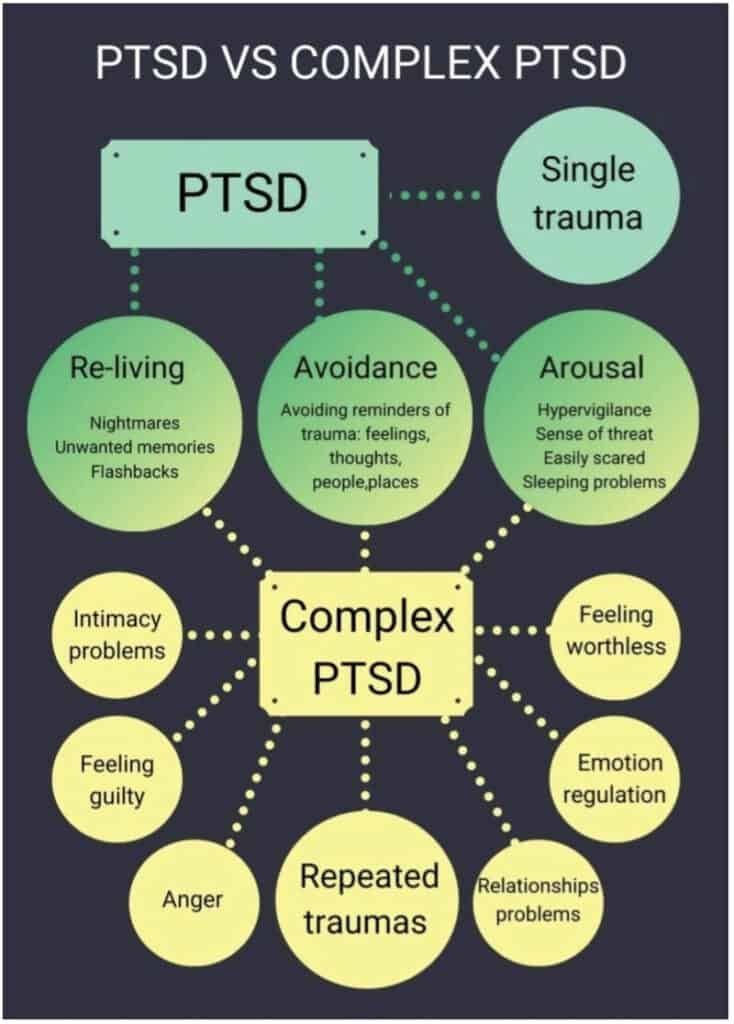
Post-Traumatic Stress Disorder (PTSD) typically develops after a single, identifiable traumatic event — an accident, assault, or natural disaster. Complex PTSD (C-PTSD) is different. It develops over time, often from repeated, prolonged trauma — especially trauma that occurs within relationships and environments where there should have been safety.
C-PTSD commonly develops from:
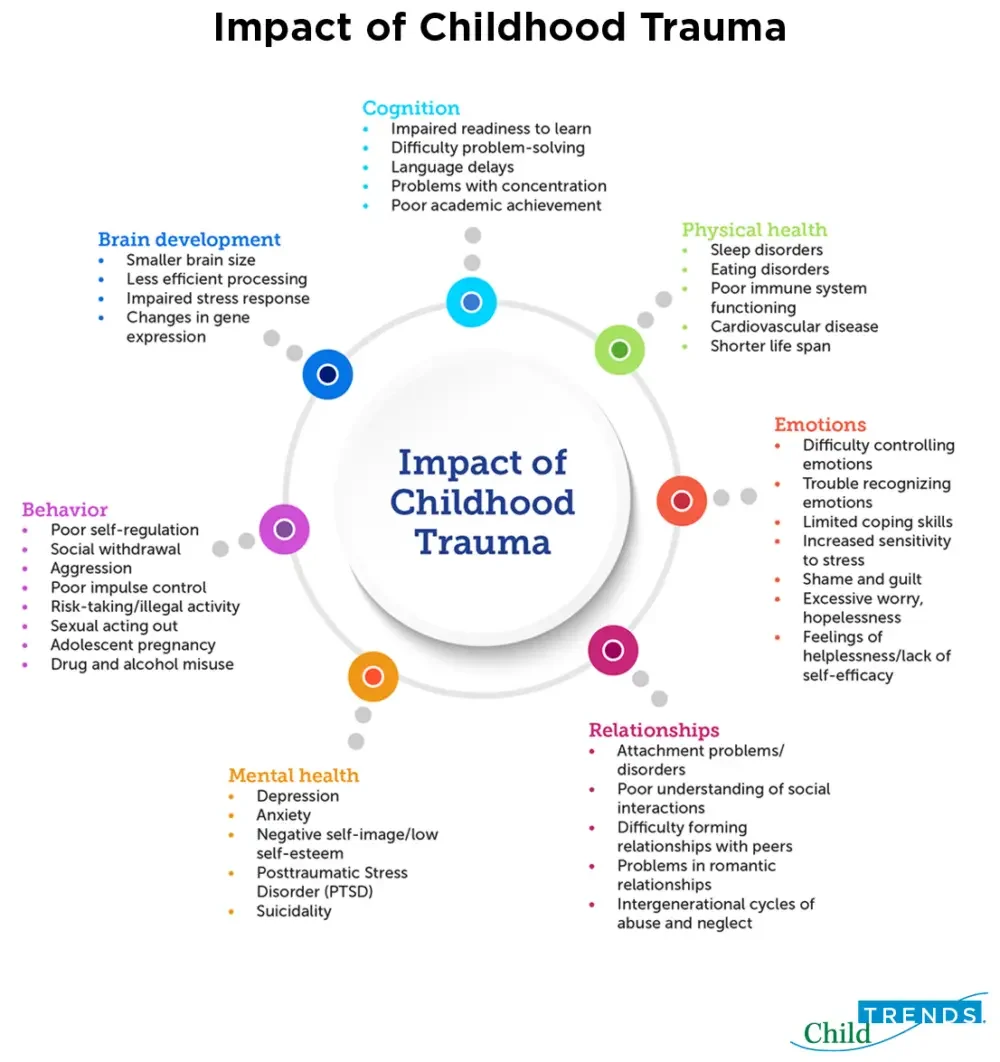
Childhood neglect or emotional abuse — growing up in a home where your needs were ignored, minimized, or punished
Physical or sexual abuse, particularly when it occurs repeatedly and at the hands of a caregiver or trusted adult
Relational and domestic abuse — intimate partner violence, coercive control, or emotional manipulation
Developmental trauma — chronic instability, abandonment, or emotional unavailability during formative years
Religious or institutional trauma — systems that used shame, control, or fear as tools of compliance
Parentification and role reversal — being forced into an adult emotional role as a child
Complex PTSD Symptoms That Are Easy to Mistake for Something Else
C-PTSD rarely announces itself clearly. Most people spend years in therapy — or avoiding therapy — without anyone ever naming what's actually happening. Instead, the symptoms get labeled as depression, anxiety, personality disorders, or simply "the way you are."
If you recognize yourself in the list below, there may be more going on beneath the surface than you've been told.
Emotional dysregulation: Intense emotional reactions that feel out of proportion — rage, despair, shame — that flood in fast and are hard to bring back down. Or the opposite: a numbness and emotional flatness that makes you feel like you're watching your life through glass.
Chronic shame and worthlessness: A deep, persistent belief that something is fundamentally wrong with you. Not what happened to you — you. This is one of the defining features of C-PTSD and one of the most painful.
Difficulty with relationships and trust: Cycles of closeness and withdrawal. Fear of abandonment alongside fear of intimacy. Difficulty trusting people, even people who have given you no reason not to.
Dissociation: Spacing out, feeling disconnected from your body, losing stretches of time, or feeling like you're observing yourself from a distance. These are nervous system responses to chronic overwhelm — not signs you're "going crazy."
Hypervigilance: A constant, exhausting state of alertness. Always reading the room, anticipating threat, waiting for the other shoe to drop. Your nervous system learned to stay on guard. It hasn't gotten the message that it's over.
Identity disruption: A fragmented, unstable, or hollow sense of self. Difficulty knowing what you want, what you value, or who you actually are separate from the roles you play and the people you manage.
Physical symptoms: Chronic pain, fatigue, digestive issues, and autoimmune conditions are all commonly linked to long-term trauma responses. The body keeps score — and eventually it starts charging interest.
If this is familiar, you're not alone — and more importantly, you're not broken. You're responding to things that actually happened.
Common Questions About Complex PTSD Treatment in Utah
Do I have Complex PTSD if I've never been diagnosed? Many people living with C-PTSD have never received that diagnosis — because it's frequently misidentified as depression, anxiety, or personality disorders. A formal diagnosis isn't required to begin treatment. A comprehensive clinical assessment at UCTR will identify what's actually driving your symptoms.
How is EMDR used for Complex PTSD? EMDR (Eye Movement Desensitization and Reprocessing) is one of the most well-researched trauma treatment approaches available. For Complex PTSD, EMDR is used as part of a phased treatment approach, after stabilization and within the ITRM framework, so that trauma processing happens at a pace the nervous system can handle.
How long does Complex PTSD treatment take? Complex trauma treatment varies by individual, but most clients at UCTR work within a focused 90-day program. Unlike indefinite open-ended therapy, the ITRM follows a structured sequence with a clear beginning, middle, and end.
Do you offer virtual therapy for Complex PTSD in Utah? Yes. We offer telehealth trauma therapy to clients throughout Utah, including Salt Lake City, Ogden, Provo, and surrounding areas, in addition to in-person sessions at our Kaysville office.
Is Complex PTSD treatable? Yes. C-PTSD is treatable — and with the right approach, fully resolvable, not just manageable. The key is working at the level of the trauma, the nervous system, and the identity not just the surface symptoms.
You've Carried This Long Enough.
You didn't choose what happened to you. But you can choose what happens next.
If you're ready to move past managing and into resolving — to understand not just what trauma did to you, but who you are without it — we're here.
The first step is a free 15-minute consultation. No pressure. Just a conversation.